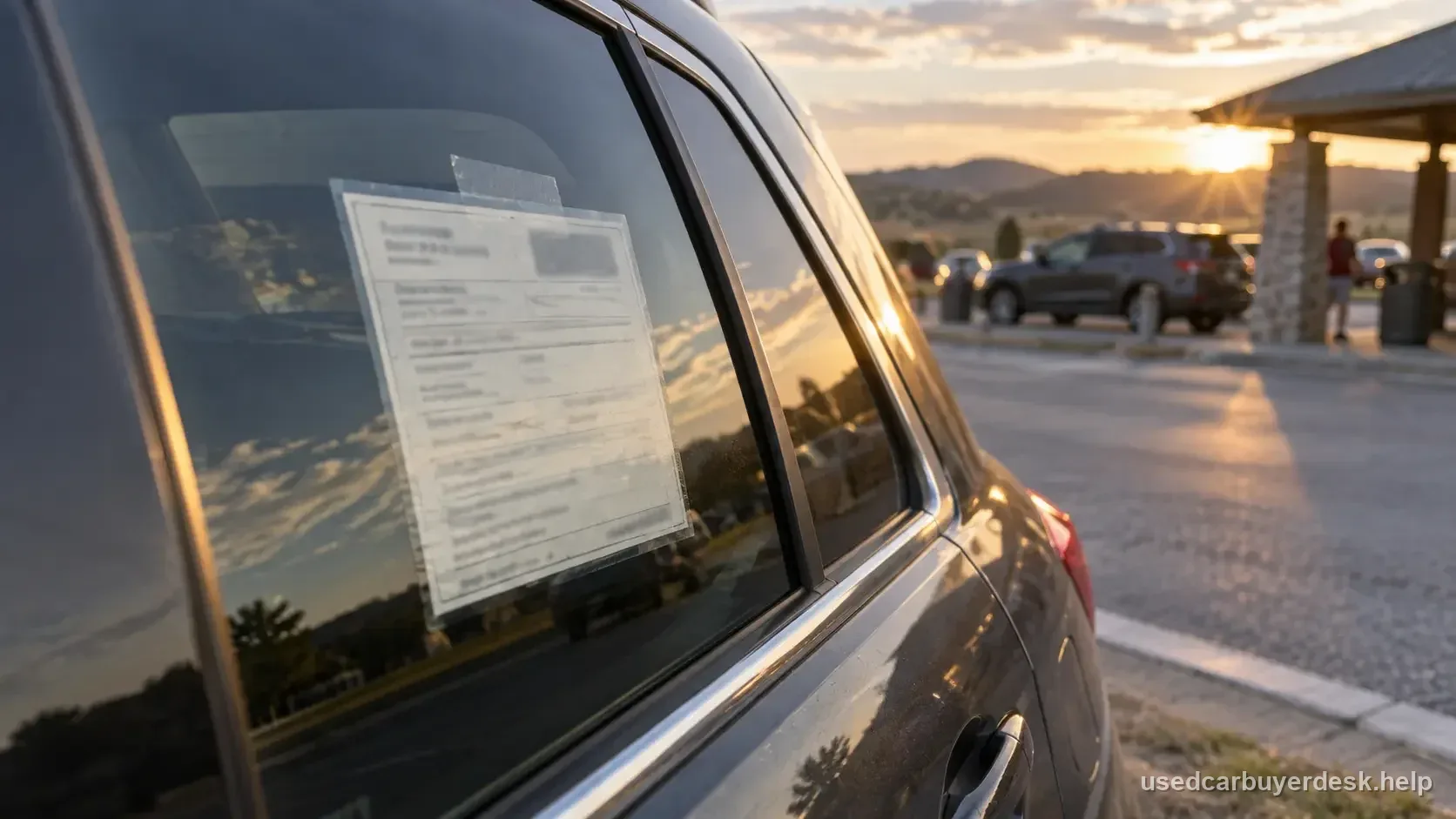
Buying a car in a different state than the one you live in creates a specific paperwork gap: the seller's state plates (or dealer temp tag) are not automatically valid once you cross into your home state, and your home state has not issued you anything yet because the car is not titled there. A transit permit — sometimes called an in-transit permit, drive-away permit, or trip permit depending on the state — exists specifically to cover that gap. It is not the same document as the "temporary tags" most buyers already know about from an ordinary in-state purchase.
The confusion is understandable because both documents look similar (a paper placard taped in a rear window) and both let you drive a car that is not yet permanently registered. The difference is jurisdiction and purpose: a standard temp tag is issued by the state where you bought the car and is meant to get you registered in that same state. A transit or in-transit permit is specifically meant to move an unregistered vehicle out of the state it was purchased in, either to your home state for registration there or, in some states, just from one point to another within that state.
Who actually issues the permit, and when
In most states, the transit permit is issued by the state where the sale happens, not your home state. If you buy from a dealer, the dealer frequently handles this at the point of sale as part of the paperwork bundle. If you buy from a private seller, the responsibility usually shifts to you: you may need to visit that state's DMV (or, in some states, apply online) to get the transit permit before you drive off, since a private seller typically has no plates to lend you and no dealer temp-tag stock.
How long you actually have, state by state
Duration is the detail that trips up the most buyers, because it varies more than people expect — from as short as a few days to a full month depending on the issuing state. Planning a multi-day drive home on a permit meant for local moves within one state can leave you unregistered partway through the trip.
| State | Typical duration | Notes |
|---|---|---|
| Texas | 5 calendar days | Vehicle Transit Permit, used when the seller keeps the Texas plates |
| Utah | 96 hours | Can move the vehicle within Utah or to another state |
| Connecticut | 30 calendar days | For an out-of-state resident buying in Connecticut |
| New York | 30 days | In-transit permit, fee applies |
| Louisiana | 30 days | Temporary registration plate from date of issuance |
Because these durations differ this much, the only reliable approach is to check the issuing state's own DMV page for the specific permit type before you travel, not assume a national standard. If your route or schedule risks running past the permit's expiration — a multi-day drive, a planned stop, weather delays — ask the issuing office directly whether an extension or a different permit class is available before you leave.
What the permit does not do
A transit permit gets you legally on the road; it does not substitute for registering the car in your home state. Once you arrive, you generally still need to title and register the vehicle where you live, and most states set their own separate deadline for doing that — commonly 30 days from the purchase or from the date you brought the vehicle into the state, though this again varies. Missing that home-state deadline can trigger its own late fees or penalties, independent of anything related to the transit permit itself.
The permit also does not establish insurance. You still need a policy that actually covers the vehicle (see the separate guide on getting an insurance binder before you have finished paperwork) before you drive, transit permit or not — most states require proof of insurance to obtain the permit in the first place, and driving uninsured carries its own risk independent of registration status.
| Document | Transit permit | Home-state registration |
|---|---|---|
| Purpose | Covers a qualifying trip from the purchase state | Records and registers the vehicle where you live |
| Issued by | Usually the state where the sale happens | Your home state's motor-vehicle agency |
| Timing | Limited by the permit's exact expiration and purpose | Separate state deadline after purchase or arrival |
| Insurance | Does not establish insurance | Requires proof meeting home-state requirements |
A practical sequence for an out-of-state purchase
- Before you travel to see the car, check the seller's state DMV site for their specific transit/in-transit permit process and current fee.
- Confirm whether a dealer will handle the permit as part of the sale, or whether you as the buyer need to apply yourself (common in private-party sales).
- Arrange insurance that will actually be active for the VIN before you drive, and bring proof of it — most permit applications require this.
- Get the permit's exact expiration date in writing, not just "a few weeks," and plan your drive and your home-state registration appointment around that specific date.
- As soon as you arrive home, start your state's own title/registration process rather than treating the transit permit's validity as your real deadline.
If the permit expires before you register
If your trip runs longer than expected, contact the issuing state's DMV (or your home state's DMV, depending on where the vehicle currently is) before the permit lapses rather than after. Some states allow a short extension or a second permit; driving on an expired permit is functionally the same as driving unregistered, which can mean a citation and, depending on the state, towing or impoundment even if the underlying sale and paperwork are completely legitimate.
Common mistakes that leave you with a coverage gap
A handful of avoidable mistakes account for most of the trouble buyers run into with transit permits. The first is assuming a bill of sale functions as a registration document — it doesn't, and presenting one to a police officer during a stop is not a substitute for the actual permit or plate. The second is not accounting for weekends and holidays: if the permit's expiration falls on a Saturday and the issuing DMV is closed, you generally cannot walk in Monday morning and treat that as still within the window — the permit's legal expiration is the date printed on it, not the next available business day.
A third mistake is treating a permit obtained for one purpose as valid for another. Some states issue a narrower permit specifically for moving a vehicle to a dealer or repair shop within the state, which is not the same document as one authorized to leave the state entirely. If you're not certain which permit type you were issued, ask the issuing office to confirm in writing before you drive, rather than assuming the paperwork covers an interstate trip because it looks similar to one that would.
Finally, don't assume a permit obtained by a dealer on your behalf covers the same scope as one you'd get yourself. Dealer-issued temporary tags sometimes carry different restrictions or shorter windows than a buyer-obtained in-transit permit, precisely because they're designed around the dealer's own in-state registration process rather than an out-of-state buyer's trip home. Ask the dealer directly whether the tag they're providing is valid for the specific interstate trip you're planning, not just for driving off the lot.
The permit's legal expiration is the date printed on it, not the next business day.