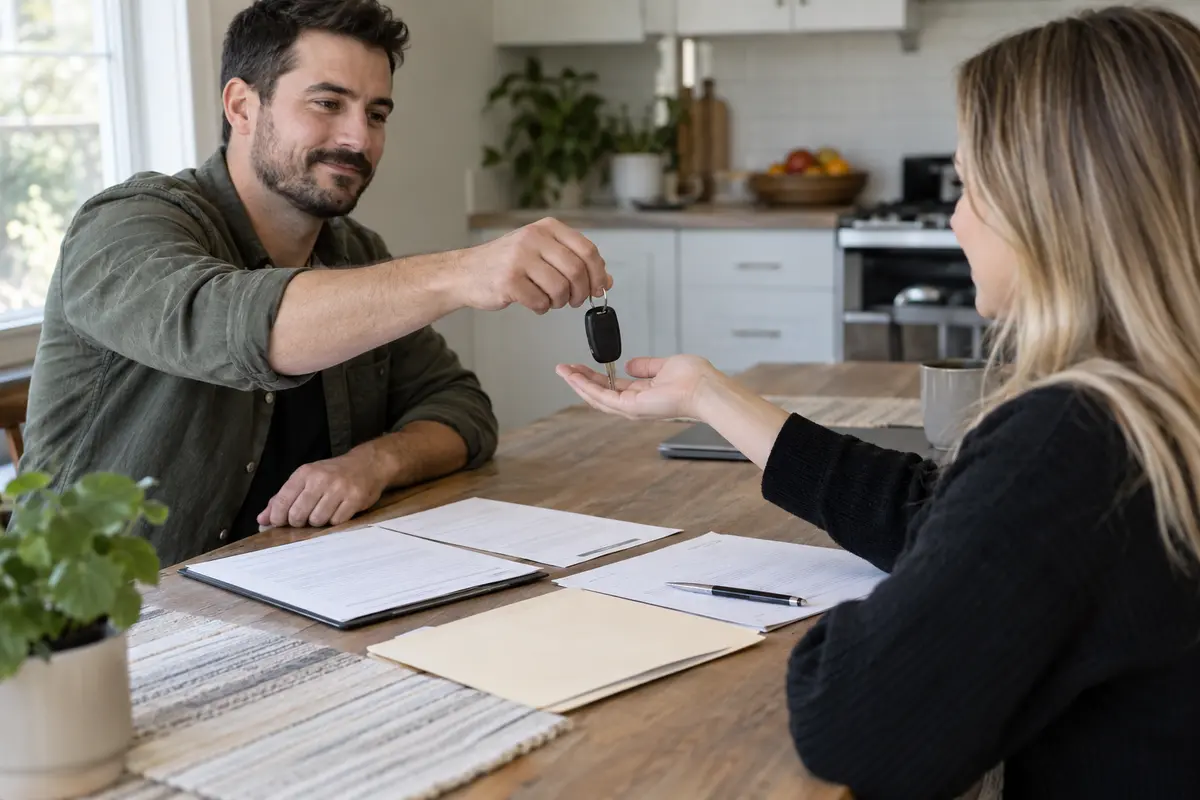
The safest private-car payment is a synchronized exchange: you verify the vehicle, seller, title and lien status; the seller verifies good funds; both sign the paperwork; and control of the car and documents changes at the same time. No payment method removes title fraud. A bank wire can be irrevocable to the wrong person just as easily as cash can be stolen, so transaction structure matters more than the label on the payment.
A bank branch is a useful neutral closing room
For a high-value private sale, meeting during business hours at the seller’s bank or lienholder can solve several problems at once. Staff can often verify an account relationship, handle a payoff according to the lender’s procedure, and help the seller confirm funds without you carrying a thick envelope of cash. Call the institution in advance using a phone number you found independently; do not rely on instructions in an email or text that could have been altered.
Cashier’s checks are useful only when the recipient can verify them
A genuine cashier’s check is a bank obligation, but a document labeled “cashier’s check” can still be counterfeit. FTC’s 2025 warning about scams aimed at online car sellers notes that a fake check can look real and the funds may even appear in an account before the bank later identifies the fraud. Arrange the exact payee name and amount beforehand and, when practical, buy the check while the seller is present. If you receive one, verify issuance with the bank using contact information you found independently—not a phone number printed on the check or supplied by the other party. Never treat an overpayment as spendable money and never refund or forward the ‘extra’ to a shipper or third party.
| Payment method | Strength | Main risk to control |
|---|---|---|
| Cash at bank | Immediate and simple | Personal safety; counting; no built-in recovery |
| Cashier’s check | Convenient for large amount | Counterfeit or verification delays |
| Domestic wire | Fast bank-to-bank transfer | Often difficult to reverse after sending |
| Escrow | Can stage money and documents | Fake escrow websites and impersonation |
| Peer-to-peer app | Convenient for small sums | Limits, fraud policy and wrong-recipient risk |
Wire only after you independently verify the destination
A wire can be appropriate when the car, seller and ownership documents are already verified and the receiving account belongs to the expected party or lienholder. Confirm routing instructions verbally using a trusted number. If instructions change at the last minute, stop. Do not wire to a “shipping company,” out-of-state relative or third party simply because the seller says it is easier. The more parties between the titled owner and the money, the harder it is to understand what you are actually buying.
Escrow is a service to verify, not a magic word
Online marketplace scams often borrow the language of escrow, buyer protection and vehicle shipping. A legitimate escrow arrangement should be one you can independently identify and verify, with clear fees, licensing or business information where applicable, written release conditions and a web address you typed yourself. Never click a seller-supplied lookalike link and assume a familiar marketplace operates the page. If you cannot verify the escrow service outside the seller’s messages, do not fund it.
A facilitated marketplace checkout is not the same thing as seller-chosen escrow
Some current private-sale marketplaces offer an integrated checkout that can verify seller identity, check title status, hold or route payment, coordinate a lien payoff, and help with registration paperwork. That can reduce the number of handoffs you must improvise yourself, but the service scope varies by platform, state, checkout tier and transaction. Verify the platform from a web address you found independently, read what it actually guarantees, identify when funds are released, and confirm who is responsible for title transfer. Do not assume the word “escrow” means the service performs identity, lien or title verification.
Do not place a meaningful deposit before seeing the car and title
A small refundable hold may be normal in some dealer transactions, but private marketplace scams exploit deposits for cars that do not exist. For a private sale, inspect the physical car, verify VIN and title, and meet the seller before transferring a deposit. If the seller claims military deployment, a sudden move, bereavement or another story requires shipping the car after you prepay, treat the urgency as a reason to stop rather than as proof that the bargain is real.
When a lien exists, split the money deliberately
If a lender still has a legal interest, do not simply pay the seller and trust them to send a payoff later. Get the lender’s payoff procedure directly. A common safe structure is paying the lienholder the exact payoff and paying any remaining equity to the seller, with written instructions for title release. Electronic title states and lender processing times vary, so know when and how ownership evidence will reach you before funding.
Build proof that survives a later dispute
Keep the signed bill of sale, copies of the completed title, bank receipt or wire confirmation, lender payoff receipt if applicable, the listing, and messages that describe the car and agreed price. Write the VIN in the payment memo when the bank format allows. The evidence does not make a bad title valid, but it helps show what was represented and paid if you later have to work with a bank, DMV, law enforcement or court.
Choose the payment method after you understand the title path
Payment and title should be designed together. A $9,000 cash purchase of a clear paper-title car can close in one bank visit. A $29,000 vehicle with an electronic lien may need a lender payoff, a waiting period for title release and a separate payment of seller equity. Trying to force both transactions into the same “cashier’s check and keys” ritual creates unnecessary risk. Write a closing diagram with four boxes: buyer funds, lienholder if any, seller equity, and ownership document. Draw the order in which each moves. Ask what evidence you receive after every move. If you cannot show why the seller will no longer control your money before you control a valid claim to the vehicle, redesign the closing. The safest method is the one whose failure points you can see and verify.