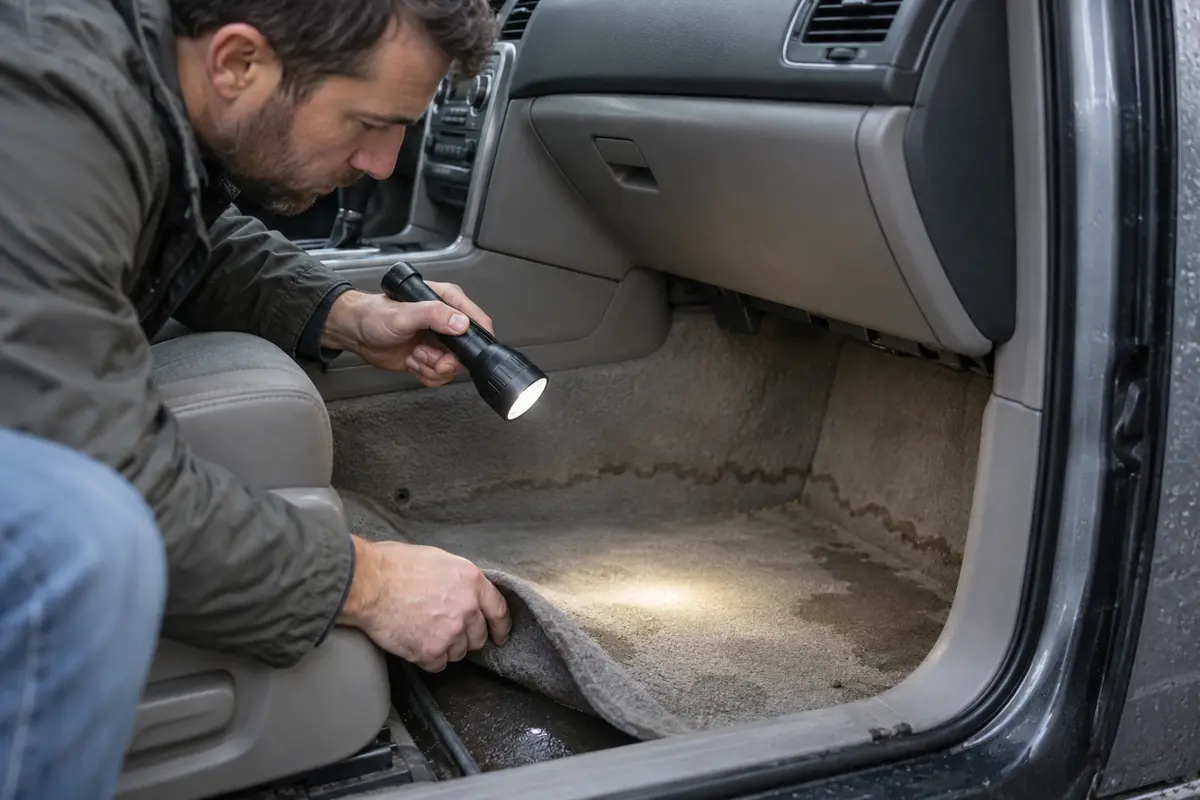
Flood damage is dangerous because cleanup can hide the event while corrosion continues inside connectors, modules, seat tracks and wiring. A car may look dry and run normally on the day you inspect it, then develop intermittent electrical or safety-system problems later. Treat flood screening as a combination of smell, hidden-area inspection, title history, geographic context and professional examination.
NHTSA advises used-car buyers to watch for vehicles moved out of hurricane and flood areas. NICB VINCheck can identify participating-insurer flood or salvage reports, and NMVTIS can show state title brands. Neither database is complete enough to let you ignore the physical car.
Start where a detailer has the hardest time reaching
Move the front seats through their full travel and inspect the seat rails, bolt heads and springs for unusual rust. Look beneath removable trunk panels, around the spare-tire well, under carpet edges and inside low storage pockets for silt, sand or a tide line. Surface rust on an exposed exhaust part can be normal; fresh rust on interior fasteners or multiple electrical grounds is much harder to explain in a relatively young car.
Use smell as a clue, then confirm it with evidence
A heavy air freshener can hide mildew, but odor alone is subjective. Run the HVAC, feel carpet padding at the lowest points, check under rubber mats, and look for condensation or staining inside lamp housings. A musty cabin plus corroded seat hardware plus silt under trim is a pattern. One damp floor after a recent rain may instead be a sunroof drain or door-seal leak, which is still worth diagnosing but is not automatically flood history.
Electrical details often betray water exposure
- Check every window, lock, mirror, seat motor, USB port, light and switch—not only the features you normally use.
- Scan all accessible modules for communication or low-voltage faults; flood damage can affect networks beyond the engine computer.
- Look for green or white corrosion on connectors, fuse panels and grounds where visible without disassembly.
- Compare headlight and taillight housings for internal moisture, replaced units or mismatched manufacture dates.
- Verify airbag/SRS, ABS and stability-control warning lights complete their normal startup check.
Make the VIN tell you where the title story has been
Run an NMVTIS report and note every state that titled the car, each brand, and the timing of ownership changes. Then compare those dates with major flood events and the seller’s story. A car moving from a storm-affected region to a distant auction or dealer soon after a disaster is not proof of damage, but it raises the value of a deep inspection. NICB’s free VINCheck is another layer, specifically for participating-insurer theft, salvage and flood reports.
| Clue | Low concern by itself | Higher concern when combined |
|---|---|---|
| Musty smell | Dirty cabin filter | Wet padding + corrosion + air freshener |
| Interior rust | Older neglected vehicle | Rust on seat bolts/grounds in young car |
| New carpet | Cosmetic refresh | New carpet plus silt in hidden cavities |
| Moist lamp | Failed seal | Multiple lamps + electrical faults |
| Interstate title move | Normal relocation | Move soon after major flood + brand anomaly |
Do not rely on a clean title to rule flood damage out
Title branding depends on how the loss was handled and reported. A vehicle repaired without an insurer total loss may not carry a flood brand, and branding practices vary by state. That is why a “clean title” statement should never end the investigation. Ask the inspector to look specifically for water lines, connector corrosion, replaced modules, rust in protected interior locations and evidence the carpet or insulation has been removed.
Know when the correct response is simply no
If several independent flood indicators appear and the seller cannot document what happened, the safest move for an ordinary buyer is to choose another car. Estimating future electrical corrosion is difficult, and intermittent problems can be expensive to reproduce and repair. A rebuilt or salvage vehicle with documented prior flood damage belongs in a specialist-risk category, not the same comparison set as an ordinary clean-history used car.
One clue can be innocent; a cluster changes the decision
Imagine a four-year-old SUV with a strong air-freshener smell. That alone means little. You then find orange corrosion on front-seat bolt heads, damp padding beneath the rear carpet, silt in the spare-wheel well and two power-seat switches that work intermittently. The history report shows the vehicle was registered in a county affected by a major flood shortly before it changed owners and moved three states away. None of those facts individually proves a total-loss flood claim. Together they create a coherent water-exposure story that deserves a specialist inspection and, for many ordinary buyers, a walk-away decision. Compare that with a car that has one fogged headlamp after a rain but dry carpet, clean interior hardware, stable electronics and an ordinary title timeline. Pattern recognition is the point of flood screening.
Photographs from before the sale can also expose a timeline that the current cabin no longer shows. Compare older listing photos, auction images, insurance-auction archives when legitimately available, and service records with what you see now. Fresh upholstery, newly replaced electronics, or recently detailed carpet are not proof of flood damage, but they deserve an explanation when they coincide with corrosion or a move out of a recently flooded region. Ask the inspector to separate ordinary age-related corrosion from water intrusion inside protected cabin areas. That distinction matters because cosmetic cleaning can make a flood car look normal while moisture-related connector and module problems continue to develop out of sight.